

Introduction
Driving traffic to your website is only half the battle. The real challenge lies in converting those visitors into leads, subscribers or customers. Many businesses invest heavily in ads and SEO but struggle to see meaningful returns because their websites are not optimized for user behavior.
This is where A/B testing strategies play a critical role. By testing different versions of web elements and analyzing real user data, businesses can make informed decisions that directly improve conversion rates. Instead of guessing what works, A/B testing reveals what actually drives results.
What Is A/B Testing?
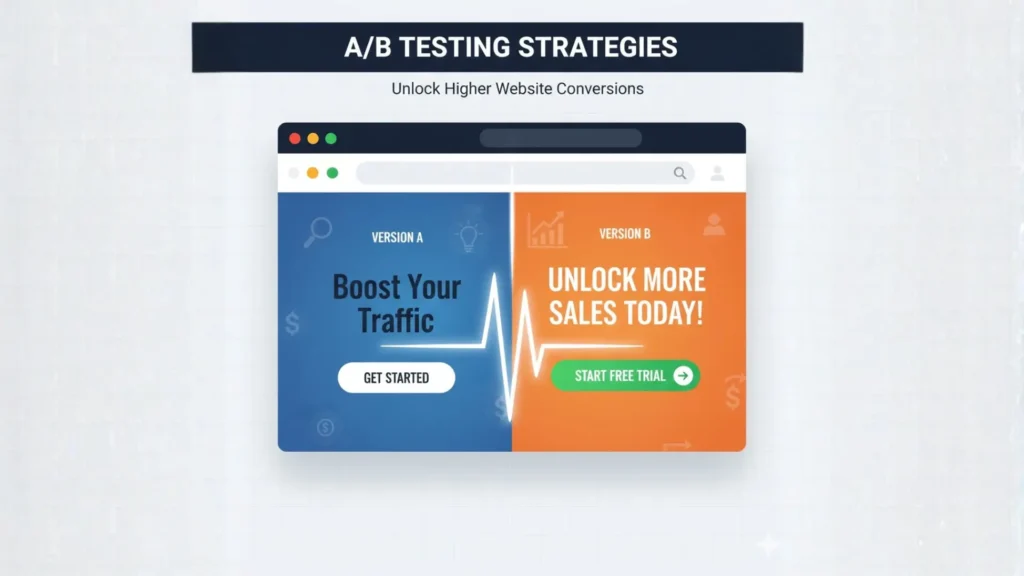
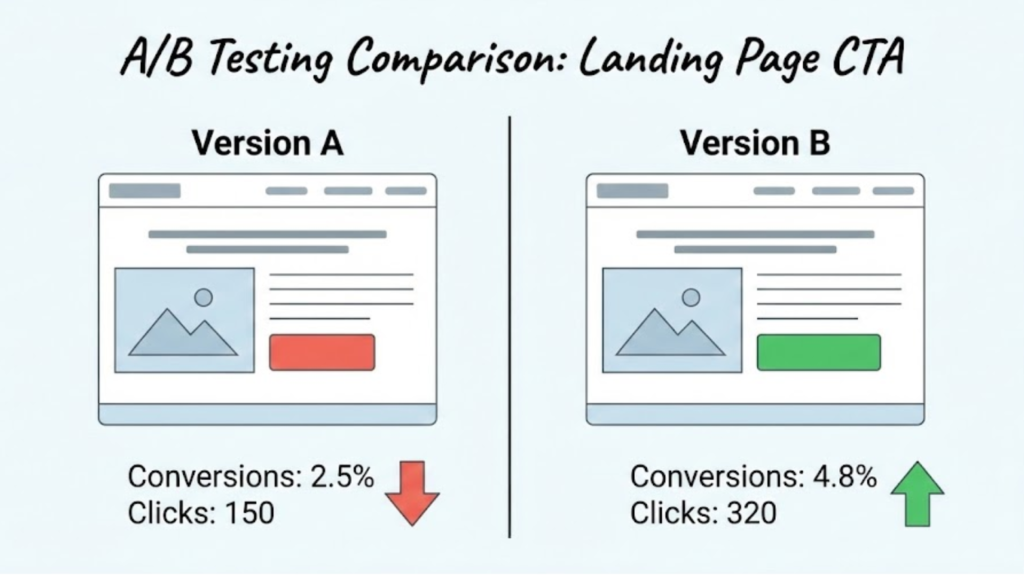
A/B testing, also known as split testing, is a method of comparing two versions of a webpage or element to determine which performs better. Visitors are randomly shown either version A or version B and their behavior is measured to identify the winning variation.
This data-driven approach helps marketers improve website performance based on real user actions rather than assumptions.
Common A/B Test Elements:
- Headlines
- Call-to-action (CTA) buttons
- Landing page layouts
- Images and videos
- Forms and input fields
- Page copy and messaging
Why A/B Testing Is Essential for Website Conversions
Without testing, even small design or content decisions can negatively impact conversions. A/B testing helps businesses understand user preferences and optimize experiences accordingly.
Key Benefits:
- Improves conversion rates without increasing traffic
- Reduces bounce rates
- Enhances user experience
- Maximizes ROI from marketing campaigns
- Supports data-backed decision-making
Core A/B Testing Strategies That Drive Results
1. Test One Variable at a Time
Testing multiple elements simultaneously makes it difficult to identify what caused the improvement. Focus on one variable-such as a CTA color or headline-to get clear insights.
2. Optimize Headlines for Clarity and Value
Headlines are often the first thing users notice. Testing different messaging styles-benefit-driven vs informational-can significantly impact engagement and conversions.
3. Improve CTA Placement and Messaging
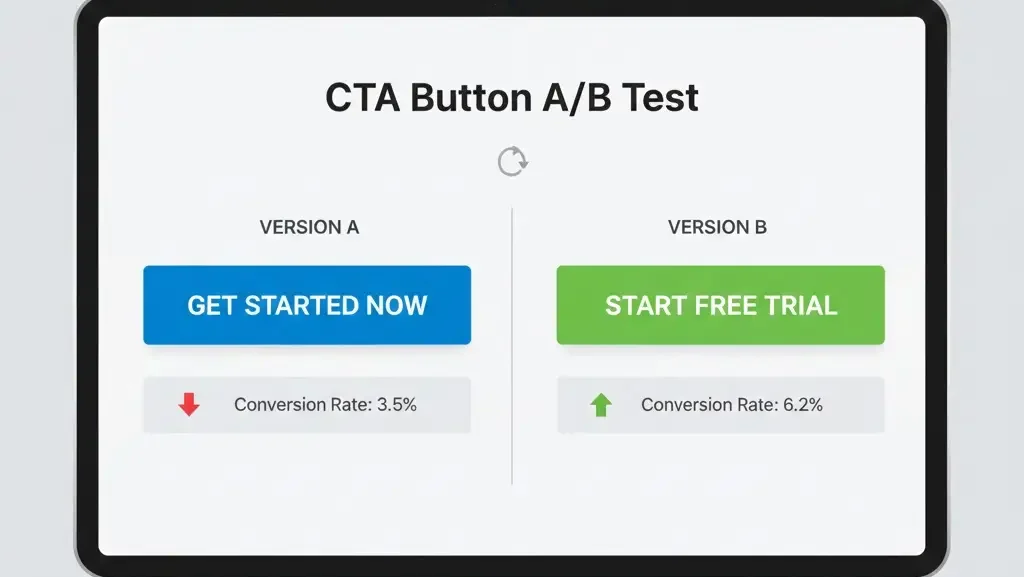
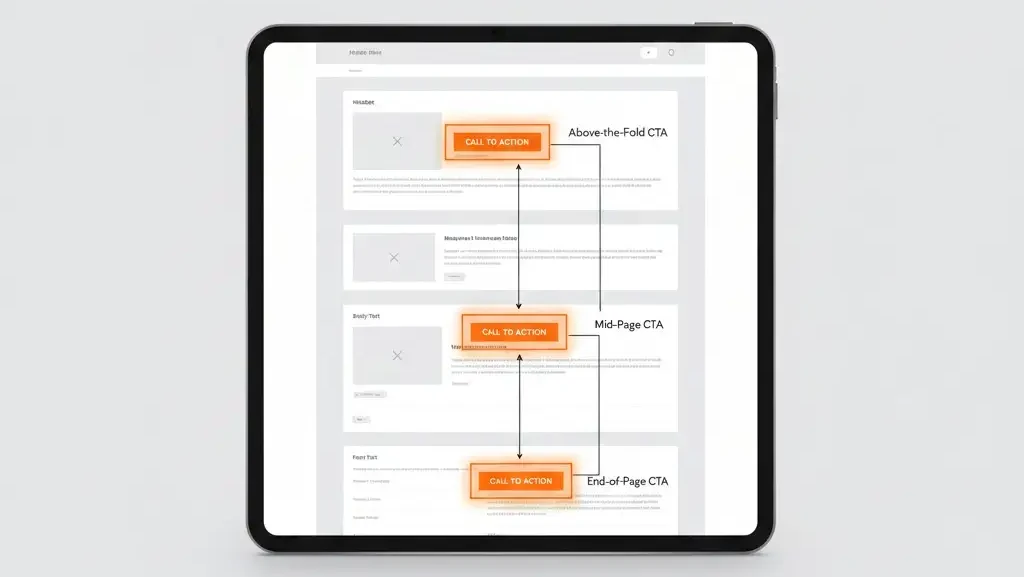
CTAs guide users toward action. Test CTA placement, wording, size, and color to find combinations that drive higher clicks and conversions.
Examples:
- “Get Started” vs “Start Free Trial”
- CTA above the fold vs mid-page
4. A/B Test Landing Page Layouts
Page structure affects how users consume information. Test variations in layout, content order or visual hierarchy to reduce friction and improve flow.
5. Optimize Forms for Higher Completion Rates
Forms are often conversion bottlenecks. Testing shorter forms, fewer required fields or clearer labels can significantly increase submissions.
6. Use UX-Focused Testing
A/B testing should prioritize usability. Test navigation simplicity, page load speed indicators and mobile-friendly designs to improve user satisfaction and conversions.
A/B Testing Metrics to Track
Tracking the right metrics ensures meaningful insights. Key performance indicators include:
| Metric | Purpose |
|---|---|
|
Conversion Rate |
Measures effectiveness of variations |
|
Click-Through Rate (CTR) |
Tracks engagement |
|
Bounce Rate |
Indicates user interest |
|
Time on Page |
Shows content relevance |
|
Cost per Conversion |
Evaluates marketing efficiency |
Common A/B Testing Mistakes to Avoid
- Ending tests too early
- Ignoring statistical significance
- Testing without clear goals
- Making changes based on assumptions
- Not segmenting users properly
Avoiding these mistakes ensures reliable and actionable results.
How A/B Testing Fits Into Conversion Rate Optimization (CRO)
A/B testing is a core component of conversion rate optimization. CRO focuses on improving the entire user journey, while A/B testing provides the experimentation framework needed to validate improvements.
Together, they help businesses:
- Reduce acquisition costs
- Improve funnel performance
- Increase revenue without increasing traffic
Future of A/B Testing
With advancements in AI and automation, A/B testing is becoming more intelligent and predictive. Future strategies will focus on personalization, behavior-based testing, and real-time optimization across devices and channels.
Conclusion
A/B testing is no longer optional-it’s essential for improving website conversions in a competitive digital landscape. By continuously testing, learning and optimizing, businesses can unlock higher revenue from existing traffic while delivering better user experiences.
When executed strategically, A/B testing transforms websites from static pages into powerful conversion engines.
Frequently Asked Questions
A/B testing is a method of comparing two versions of a webpage, CTA or design element to determine which performs better in driving conversions.
A/B testing helps identify what actually works for users, reducing guesswork and improving conversion rates using real data.
Common elements include headlines, CTAs, landing page layouts, images, forms, page copy and navigation structure.
By continuously testing and refining website elements, businesses can remove friction points and improve user experience, leading to higher conversions.
An A/B test should run until it reaches statistical significance, usually between 1-4 weeks depending on traffic volume.