

Introduction
In 2026, driving traffic to a website is no longer the hardest part of digital marketing. The real challenge is converting that traffic into leads, customers and revenue. With rising advertising costs and increasing competition, businesses must focus on making the most of every visitor they attract.
This is where conversion rate optimization (CRO) becomes critical. CRO ensures that your website doesn’t just attract visitors-but persuades them to take meaningful action.
What Is Conversion Rate Optimization?
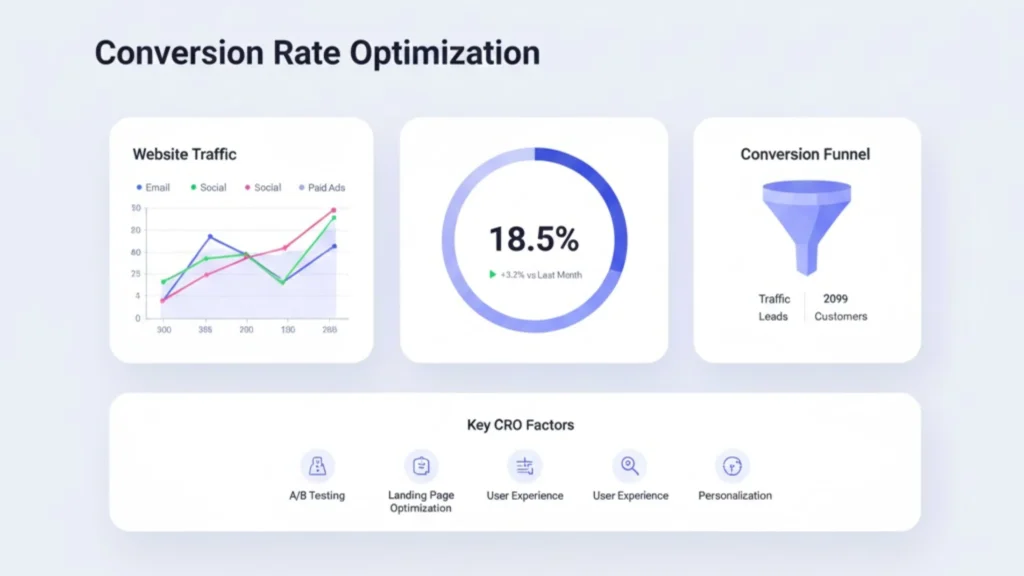
Conversion rate optimization is the process of improving your website, landing pages and user journey to increase the percentage of visitors who complete a desired action. This action could be:
- Filling out a form
- Signing up for a newsletter
- Downloading a resource
- Making a purchase
- Requesting a demo or consultation
Instead of spending more money to bring in new traffic, CRO focuses on improving performance using existing traffic.
Why Conversion Rate Optimization Matters in 2026
1: Digital Advertising Costs Are Increasing
Paid ads are becoming more expensive across platforms. CRO helps maximize ROI by converting more users without increasing ad spend.
2: Users Expect Seamless Experiences
Modern users demand fast-loading pages, intuitive navigation, and clear messaging. Poor UX leads to high bounce rates and lost revenue.
3: Data-Driven Decisions Win
CRO relies on real user behavior and testing, allowing businesses to optimize based on facts-not assumptions.
Key Elements of a High-Converting Website
| CRO Element | Description |
|---|---|
|
Landing Page Optimization |
Clear value proposition, focused messaging and minimal distractions |
|
CTA Optimization |
Action-oriented, visible, and persuasive calls-to-action |
|
UX Design for Conversions |
Simple navigation, mobile optimization and fast loading |
|
Trust Signals |
Testimonials, reviews, certifications and security badges |
|
Funnel Optimization |
Smooth user flow from awareness to conversion |
|
A/B Testing |
Testing variations to identify what performs best |
Landing Page Optimization: The Foundation of CRO
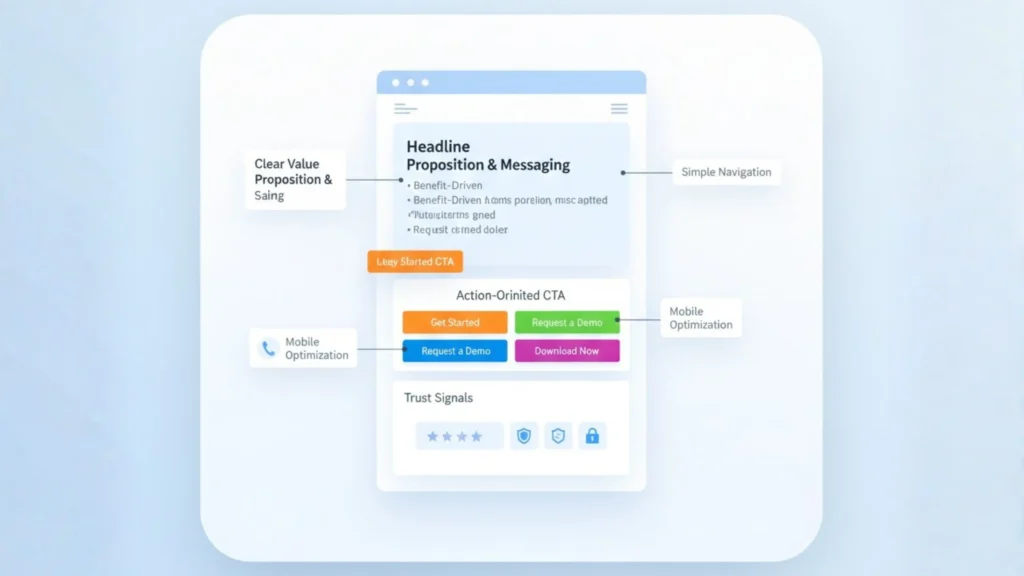
Landing pages play a crucial role in conversion rate optimization. A well-optimized landing page should:
- Address a specific user problem
- Clearly communicate the solution
- Highlight benefits over features
- Remove unnecessary navigation
- Include a strong, focused CTA
Even small changes-such as headline clarity or button placement-can significantly improve conversion rates.
CTA Optimization: Guiding Users to Act
Calls-to-action (CTAs) guide users toward the next step. Effective CTAs are:
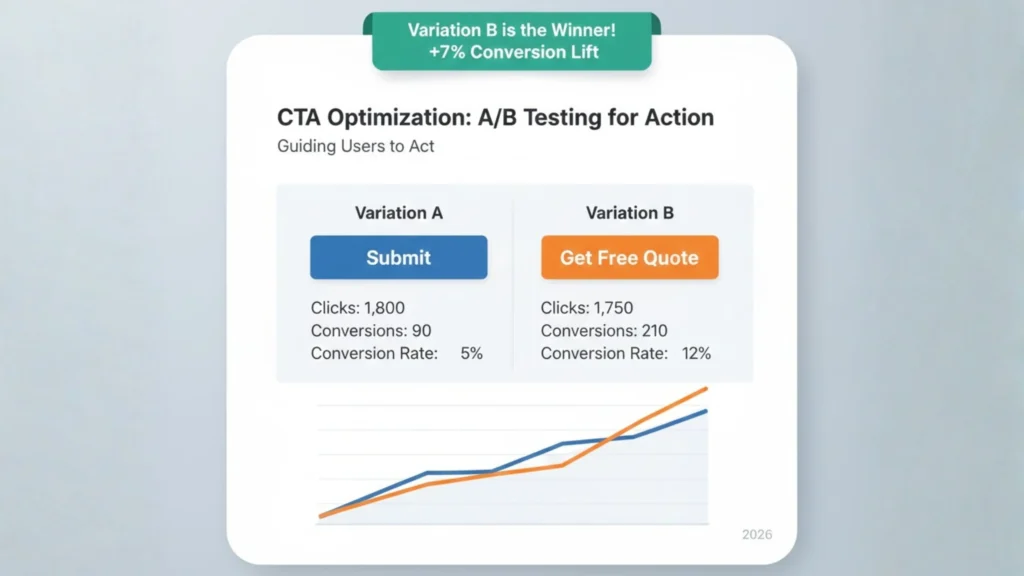
- Clear and specific (e.g., “Get Free Quote” instead of “Submit”)
- Visually prominent
- Placed strategically across the page
- Aligned with user intent
CTAs should feel helpful-not pushy.
A/B Testing: The Backbone of CRO
A/B testing allows businesses to compare two versions of a webpage or element to see which performs better. You can test:
- Headlines
- CTA text and colors
- Page layouts
- Form length
- Images and visuals
Over time, consistent testing leads to incremental improvements that compound into major conversion gains.
UX Design for Conversions
User experience directly impacts conversions. Poor design creates friction, confusion and frustration.
Best UX practices for CRO include:
- Mobile-first design
- Simple navigation
- Fast page loading speeds
- Clear visual hierarchy
- Easy-to-read content
A frictionless experience builds trust and encourages users to take action.
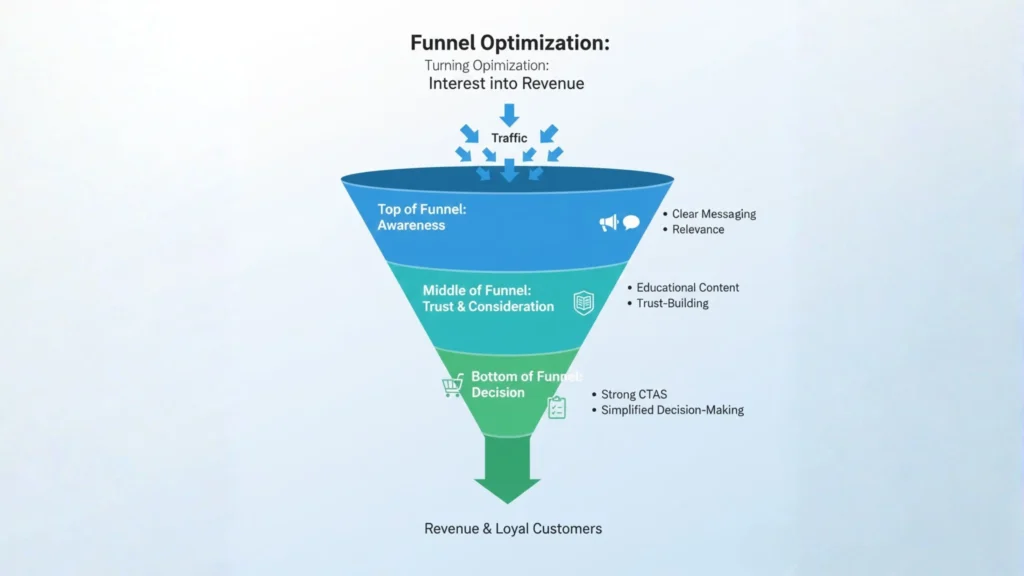
Funnel Optimization: Turning Interest Into Revenue
CRO doesn’t stop at one page. It applies across the entire marketing funnel:
- Top of Funnel: Clear messaging and relevance
- Middle of Funnel: Educational content and trust-building
- Bottom of Funnel: Strong CTAs and simplified decision-making
Optimizing each stage ensures users don’t drop off before converting.
Benefits of Conversion Rate Optimization
Businesses that prioritize CRO experience:
- Higher lead quality
- Improved sales performance
- Lower customer acquisition costs
- Better user engagement
- Increased revenue without extra traffic
CRO is one of the highest ROI activities in digital marketing.
The Future of Conversion Rate Optimization
In 2026, CRO will continue evolving with:
- AI-powered personalization
- Predictive analytics
- Behavioral tracking
- Advanced testing tools
Businesses that invest early in CRO will outperform competitors relying solely on traffic growth.
Conclusion
Conversion rate optimization transforms websites from passive digital assets into active revenue engines. Instead of chasing more traffic, CRO helps businesses unlock the full potential of their existing audience.
In a competitive digital landscape, success belongs to those who optimize smarter-not just spend more.
Frequently Asked Questions
Conversion rate optimization is the process of improving website elements to increase the percentage of visitors who complete desired actions such as purchases or sign-ups.
With rising ad costs and competition, CRO helps businesses generate more revenue from existing traffic without increasing marketing spend.
Good UX design improves navigation, clarity and usability, making it easier for users to take action and increasing conversion rates.
A/B testing compares different versions of pages or elements to determine which performs better, helping businesses make data-driven optimization decisions.
Landing pages, product pages, checkout pages and lead generation forms should be prioritized for conversion optimization.