
Growphil

Why Digital Marketing Is the Growth Engine Your Business Needs in 2026

digital-marketing-growth

Why Digital Marketing Is the Growth Engine Your Business Needs in 2026

In 2026, digital presence is no longer a competitive advantage – it is a business necessity. Customers now discover brands, compare products and make purchasing decisions almost entirely online. Businesses that fail to adapt to modern digital marketing strategies risk losing visibility, credibility and revenue to competitors who move faster and market smarter.
 
To achieve sustainable growth, companies must adopt a data-driven, conversion-focused digital marketing approach. From startups aiming to scale to established enterprises looking to strengthen market leadership, digital marketing has become the foundation of predictable and measurable business growth.

What Is Digital Marketing in Today’s Landscape?

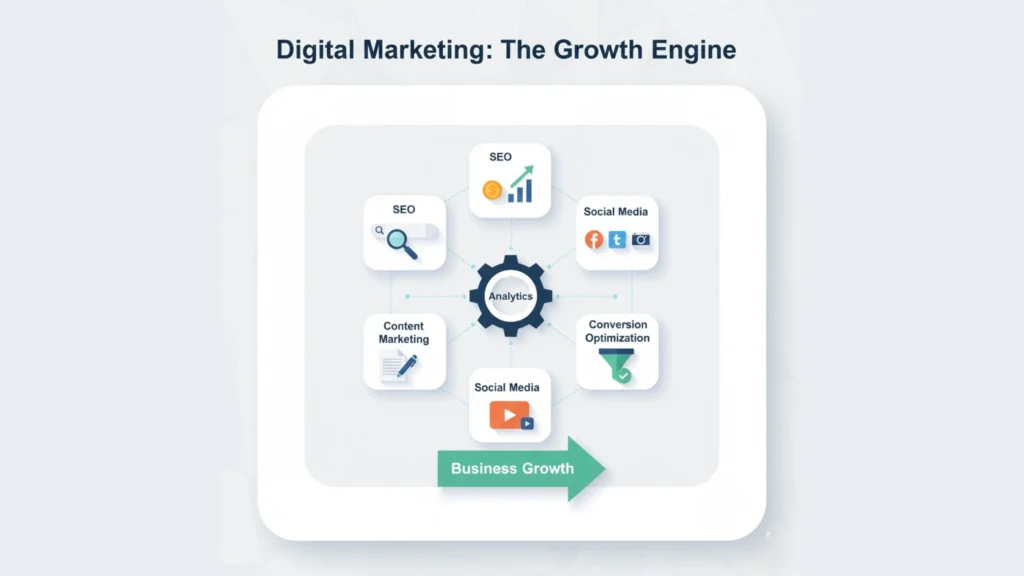
Digital marketing refers to the use of online channels to promote a brand, attract targeted audiences and drive meaningful actions such as leads, sign-ups or sales. It spans multiple platforms, including search engines, social media networks, paid advertising channels, content platforms and conversion optimization tools.
Unlike traditional marketing methods, digital marketing allows businesses to:

This level of control and accountability makes digital marketing indispensable in 2026.

Digital Marketing in Today’s Landscape

Why Digital Marketing Is Critical for Business Growth

Customers Are Online - And So Is the Competition

Consumers actively research products, read reviews and compare brands before making decisions. If a business is not visible during this process, competitors will capture that demand.

Measurable Results Enable Smarter Decisions

Digital marketing provides clear insights into website traffic, user behavior, lead quality and conversions. These insights enable businesses to refine strategies, reduce waste and scale efficiently.

Cost-Effective and Scalable Growth

Channels such as search engine optimization and content marketing deliver long-term visibility, while paid advertising offers immediate traction. Together, they form a balanced growth strategy that scales with the business.

How Digital Marketing Drives Business Growth in 2026

Digital Channel Primary Purpose Business Impact
Search Engine Optimization (SEO)
Increase organic visibility
Sustainable traffic and long-term lead generation
Performance Marketing (PPC)
Drive instant traffic
Faster conversions and measurable ROI
Social Media Marketing
Build brand awareness
Stronger engagement and customer trust
Content Marketing
Educate and influence audiences
Authority building and organic growth
Conversion Rate Optimization (CRO)
Improve user actions
Higher conversions without extra ad spend
Marketing Funnel Optimization
Guide users toward purchase
Better lead quality and sales efficiency
Digital Marketing Strategies That Deliver Results

Key Digital Marketing Strategies That Deliver Results

Performance Marketing (PPC & Paid Advertising)

Performance marketing enables businesses to reach high-intent users instantly through platforms such as Google Ads, social media ads and display networks.
Best suited for:
  • Rapid lead generation
  • Product or service launches
  • Retargeting potential customers
  • Maximizing conversion efficiency
Every campaign is optimized for performance, not vanity metrics.

Search Engine Optimization (SEO)

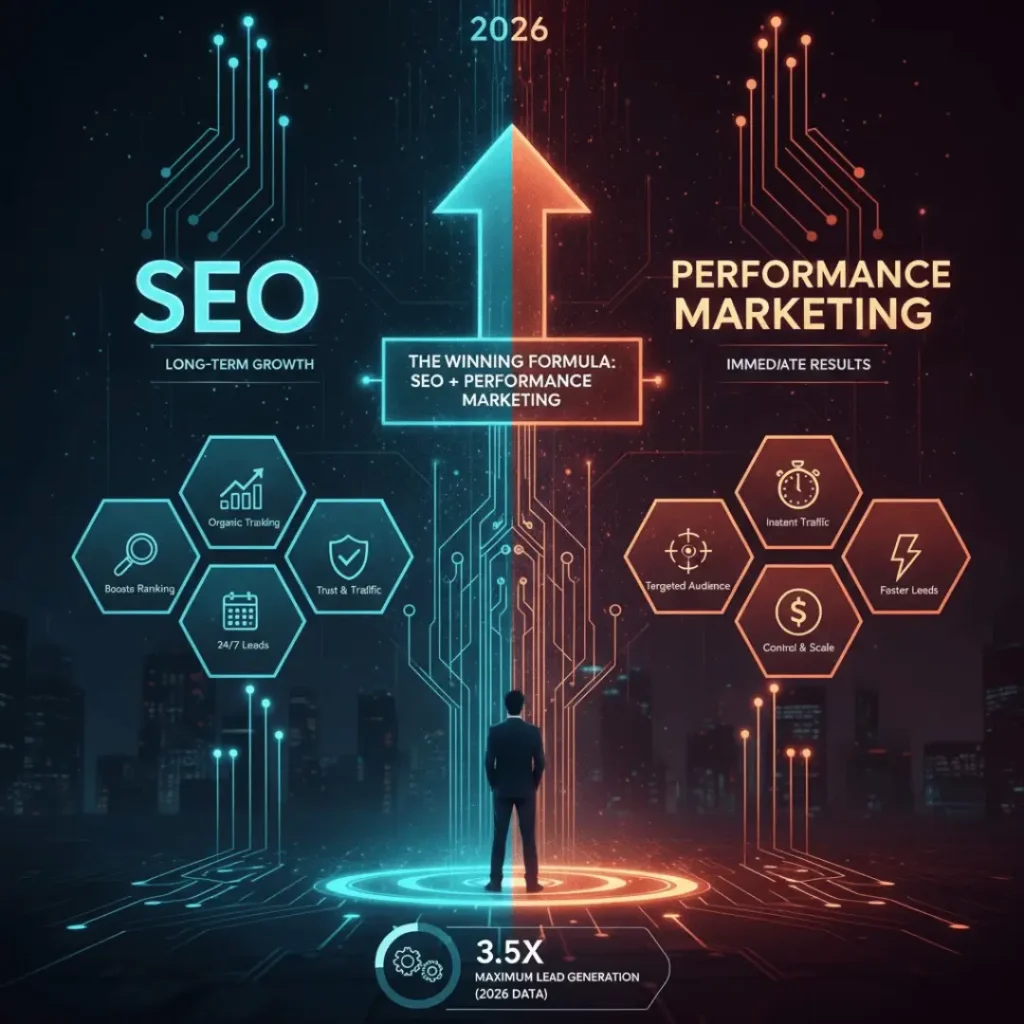
SEO helps websites rank higher on search engines, driving consistent organic traffic and building long-term authority.
Benefits of SEO include:
  • Increased online visibility
  • Higher-quality website traffic
  • Improved trust and credibility
  • Sustainable lead generation

Search Engine Optimization (SEO)

Social Media Marketing

Social media platforms help businesses build awareness, engage audiences and foster long-term relationships. With the right strategy, social media becomes a powerful acquisition and retention channel.
Key focus areas include:
  • Platform-specific content strategies
  • Short-form video and visual content
  • Community engagement
  • Paid promotions for reach and leads

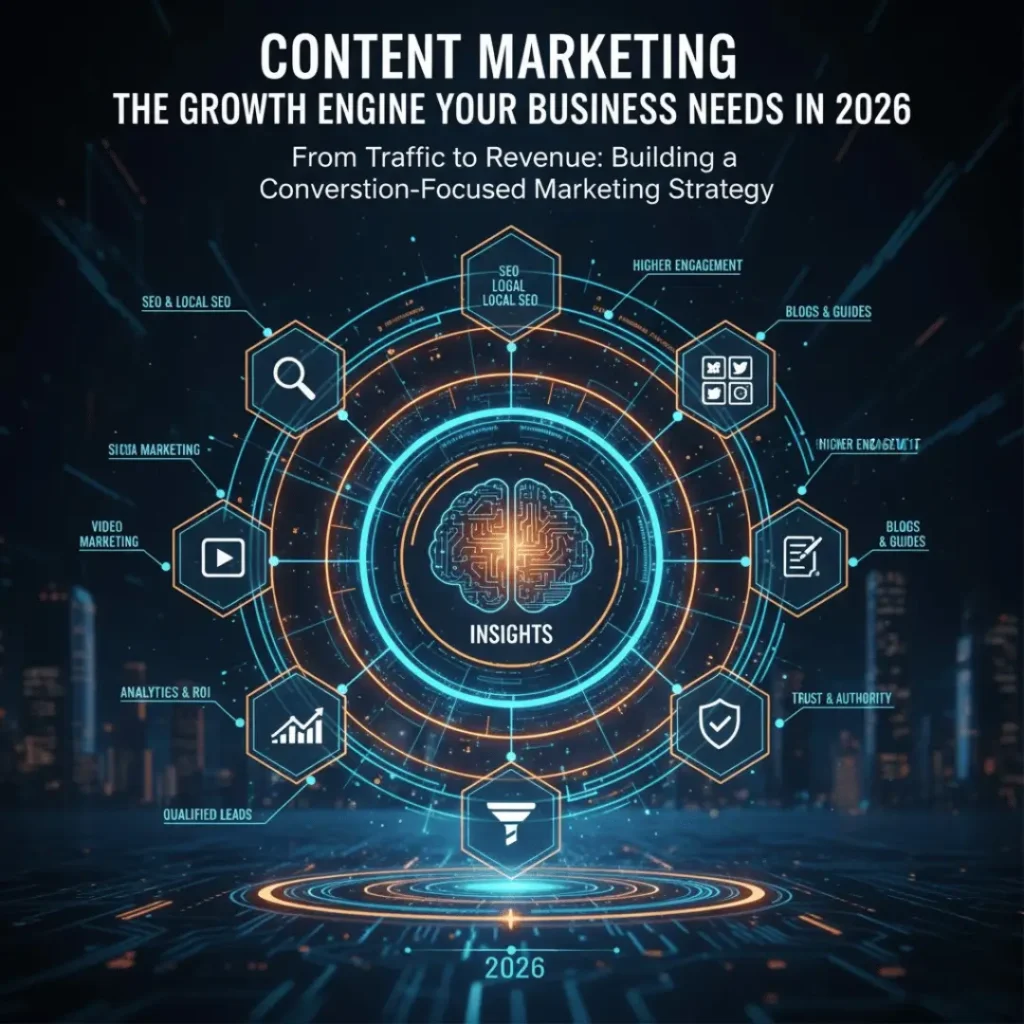
Content Marketing That Converts

Content marketing supports every stage of the buyer’s journey. High-quality content educates users, answers critical questions and influences purchasing decisions.

Effective content marketing:

Conversion Rate Optimization (CRO): Turning Traffic Into Revenue

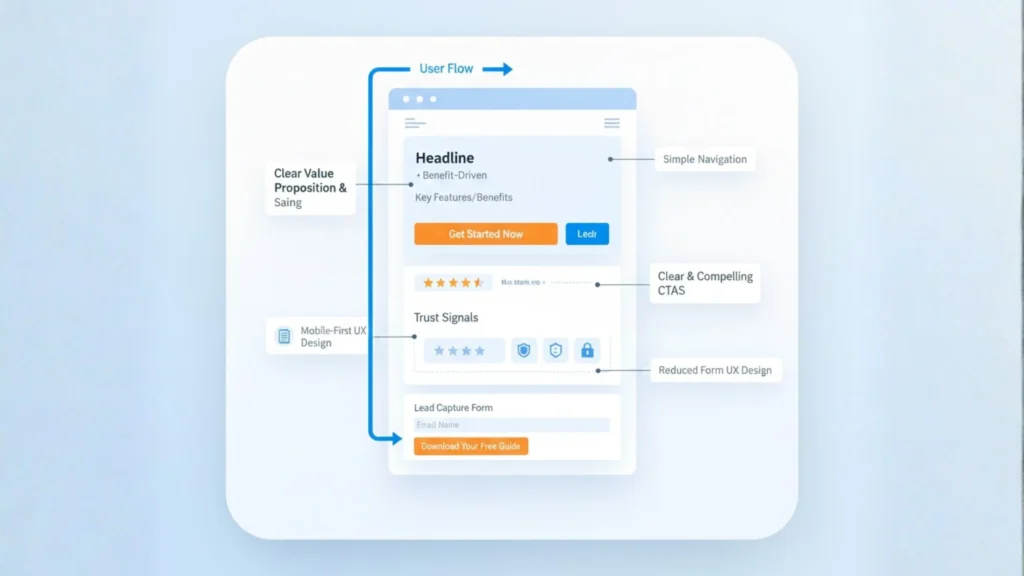
Attracting traffic is only half the equation. Conversion rate optimization focuses on improving user experience, messaging and calls-to-action to convert visitors into customers.

Common CRO techniques include:

Conversion Rate Optimization

The Future of Digital Marketing in 2026

As technology evolves, digital marketing will continue to be shaped by artificial intelligence, automation and personalization. To stay competitive, businesses must:

Organizations that adapt early will outperform those that rely on outdated strategies.

Conclusion

Digital marketing is no longer optional – it is the foundation of modern business growth. A well-executed digital strategy enables brands to reach the right audience, deliver value and convert attention into measurable results.
Businesses that invest in data-driven, conversion-focused digital marketing in 2026 will be better positioned to grow, scale and lead their industries in the years ahead.

Frequently Asked Questions

Digital marketing is essential in 2026 because customers research, compare and purchase products online. It helps businesses reach the right audience, track performance and achieve sustainable growth in a highly competitive digital environment.

Digital marketing drives business growth by increasing online visibility, attracting targeted traffic, improving engagement and converting visitors into customers through data-driven strategies and optimized user experiences.

The most effective digital marketing strategies include search engine optimization (SEO), performance marketing (PPC), social media marketing, content marketing and conversion rate optimization (CRO). Together, these strategies support both short-term and long-term growth.

Yes, digital marketing is generally more cost-effective than traditional marketing because it allows precise audience targeting, real-time performance tracking and continuous optimization, resulting in better return on investment.

Conversion rate optimization focuses on improving website design, messaging and calls-to-action to increase conversions. It ensures that existing traffic generates more leads or sales without increasing marketing spend.
Leave a Comment

Your email address will not be published. Required fields are marked *